Hello.
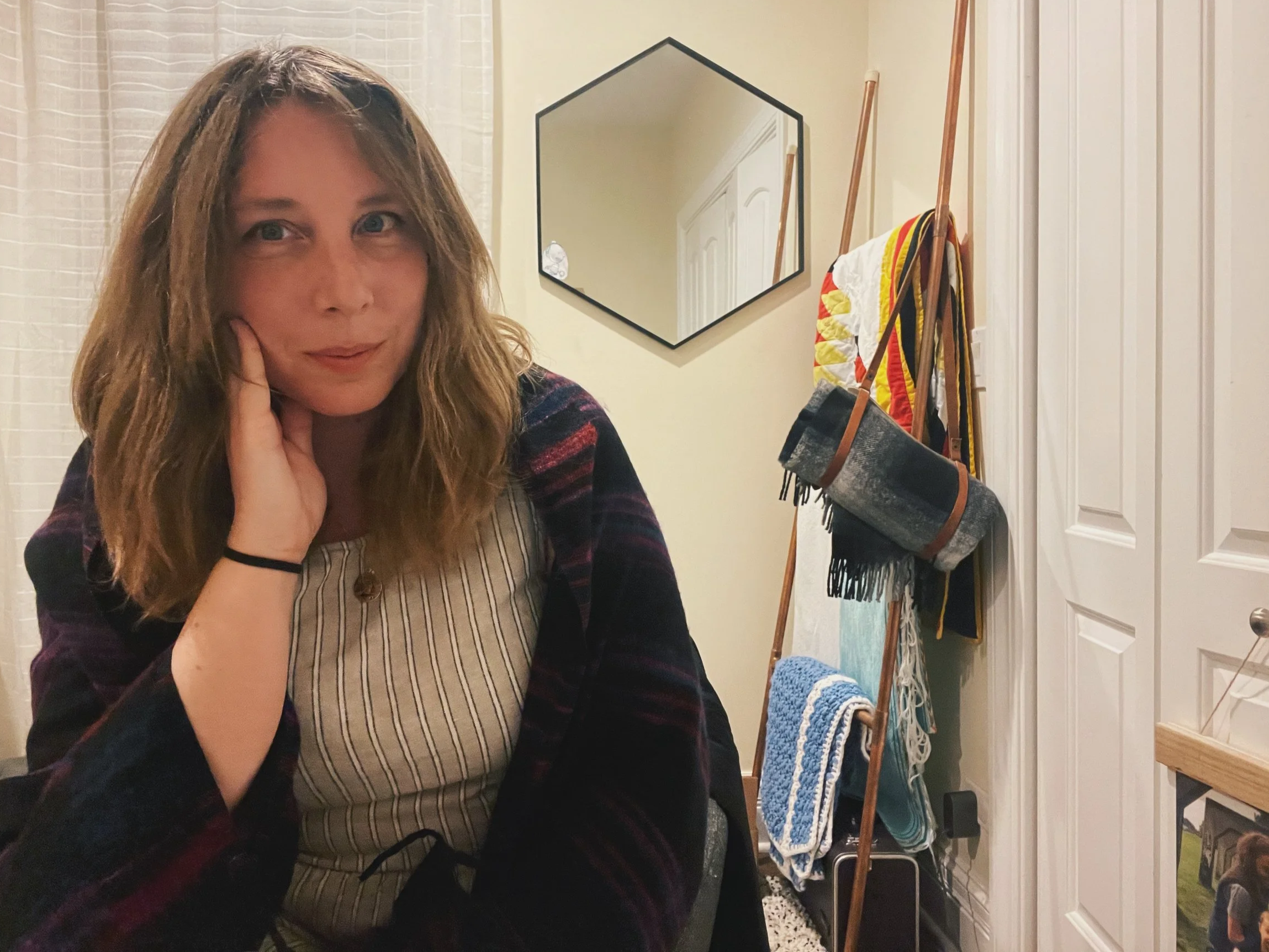
Katie Scarlett Brandt is a journalist, author, and Editor-in-Chief for Chicago Health Magazine. She’s also a 2026 Kiplinger Fellow — saving local news.
In my reporting, I specialize in untangling complex social issues with no easy answers. These issues so far have included tribal energy sovereignty, Chicago’s aging sewer system, and even internet access!
I’m a member of the Society of Environmental Journalists and the Association of Health Care Journalists. The Solutions Journalism Network has featured my stories, and recently, "‘How Did This Happen?’”, my piece on the closure of Weiss Memorial Hospital in Chicago was a finalist in the Chicago Society of Professional Journalist awards. I also learned a ton working on this series about Venezuelan migrant students’ mental health, which I was able to dig into with my colleague Clavel Rangel and funding from the Fund for Investigative Journalism, the International Women’s Media Foundation, and Investigative Reporters and Editors.
Thank you for visiting my website!
Forthcoming in 2026 From Routledge
Janet Rowley & the History of
a Revolutionary Discovery
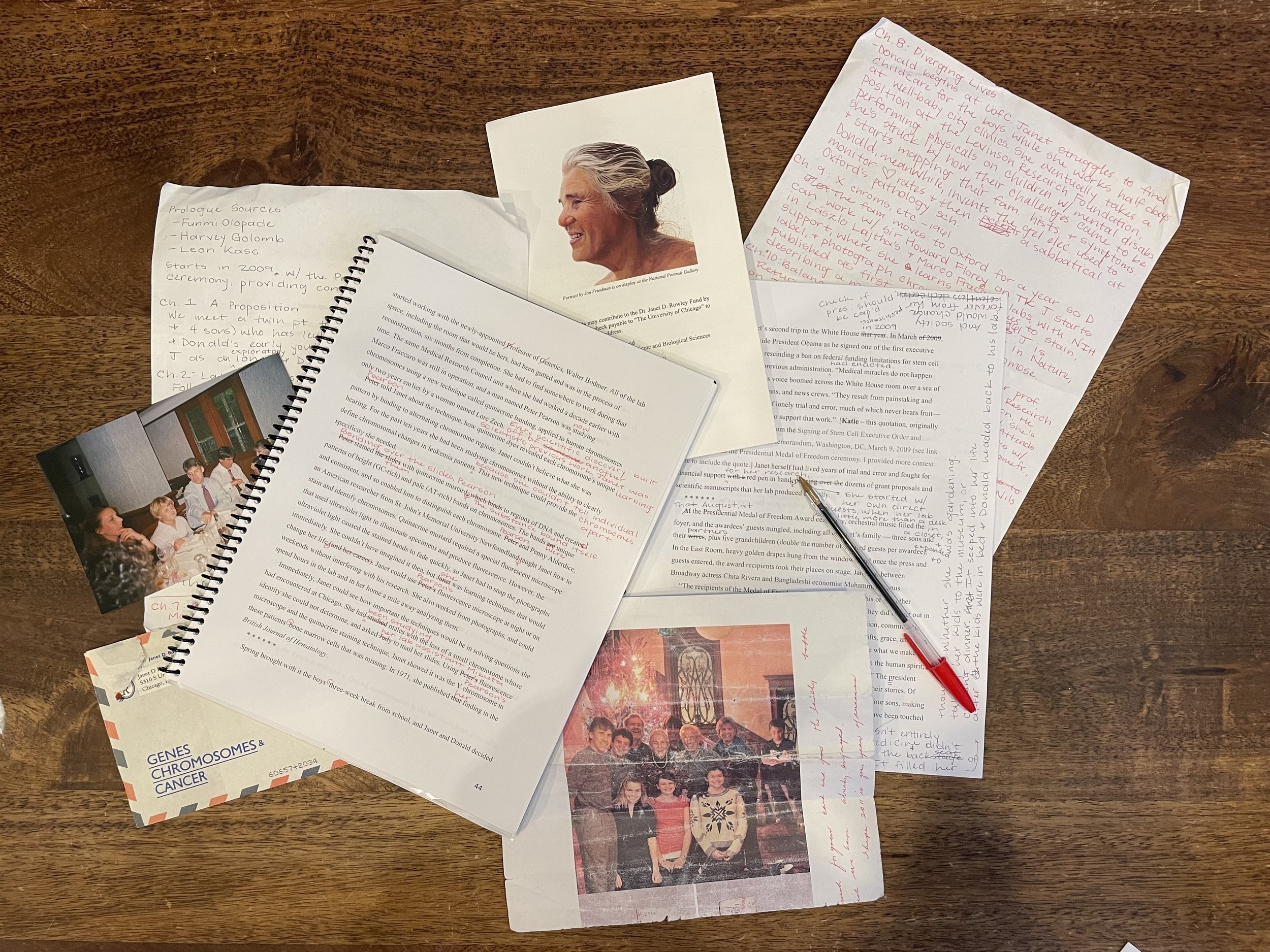
Janet Rowley’s work revolutionized the way we think about and treat cancer today. After making a startling observation in the 1970s, Janet discovered the elusive but critical link between cancer and genetics. Her revelation that a specific exchange – translocation – caused some types of leukemia led to the development of one of the most effective cancer therapies available and laid the groundwork for discovering others. This biography — which I worked on for years, getting to know Janet, her husband Donald Rowley, and their motivations — explores how two extraordinarily gifted individuals forged a unique life together and redefined medicine as we know it. See how two imaginative and independent scientists influenced each other as they raised a family and dealt with the challenges and successes of their professional careers. Janet’s story draws back the curtain from private life to reveal the intersections where science and life influence each other. It serves also as a demonstration, especially for young women in demanding fields. Following Janet’s death, I wrote about five things that our time together taught me. And now, I’m thrilled her story continues for others to discover.
Publications
Brain Facts
Caregiving Magazine
Chicago Health Magazine
El Tiempo Latino
Georgia Public Broadcasting
Huffington Post
Insider
Medicine on the Midway
Native Science REport
Positive MagazinE
The Athens News
FELLOWSHIPS
— Northwestern Local News Initiative - Media Innovation and Leadership Academy
— Kiplinger
— National Press Foundation
— Journalists-in-Aging
— National Cancer Institute-AHCJ
GRANTS
— Carter Center Newsroom Mental Health Parity Collaborative
— Fund for Investigative Journalism
Favorite Features
Pushing Physicians to the Brink
Chicago Health Magazine
Burnout and a strained healthcare system are forcing medicine to confront how it cares for its own.
This story was produced as part of the Mental Health Parity Collaborative, a group of newsrooms that are covering stories on mental health care access and inequities in the U.S. The partners on this project include The Carter Center and newsrooms in select states across the country.
When Grandparents Become Parents
Georgia Public Broadcasting / Caregiving Magazine
How opioid settlement funds could support programs for older adults raising grandchildren.
When the Savers Need Saving
Chicago Health Magazine
Safety-net hospitals brace for an uncertain future, with Medicaid and SNAP cuts looming.
After the Raids
Chicago Health Magazine
Chicago families grapple with trauma following federal agents’ immigration sweeps.
“How Did This Happen?”: Anger, confusion, and sadness take root in the early days of Weiss Memorial Hospital’s closure
Chicago Health Magazine
Even before Weiss Memorial Hospital administrators locked the front doors on Friday, Aug. 8, the building looked abandoned. Over the months, weeds grew unchecked, blocking exterior signage, climbing the walls below the administration office windows, and lining the sidewalks.
After the Darién: Venezuelan Migrant Children and the Mental Health Journey They Face
El Tiempo Latino / Chicago Health Magazine
When Texas sent buses of displaced migrants north to sanctuary cities, it was a political move. But there were real people aboard, including thousands of children who had been through significant trauma. How were cities responding to their mental health needs? This project had support from the Fund for Investigative Journalism, International Women’s Media Foundation, and Investigative Reporters and Editors.
Over the Threshold: America’s Unhoused Older Adults
Caregiving Magazine
This in-depth series looks at the state of older adults and homelessness in the U.S. (part 1), what puts women at particular risk (part 2), how street medicine meets people where they are (part 3), and potential solutions (part 4). It asks how we got here, how we as a society respond, and what possible futures look like.
A Shared Future
Native Science Report
The American Buffalo, a new Ken Burns documentary, argues that bison and Native Americans share a common history. Today, tribes are working to heal their communities by rebuilding herds.
Rising Concerns
Chicago Health Magazine
Where increased flooding and sewage treatment meet — and how both impact human health.
Life After Death
Chicago Health Magazine
Some answers only reveal themselves after a person dies. For those paying attention, the information can change perspectives and save lives.
Connecting Families
Chicago Health Magazine
Pregnancy and childbirth come with potentially fatal health risks, including blood clots and high blood pressure. Black women die of these conditions at six times the rate of white women in Chicago, but what is the city doing about these disparities?
The Great Unequalizer
Chicago Health Magazine
Chicago faced severe health inequities long before Covid-19. Whose job is it to solve them?
The Backroad to Broadband
Native Science Report
Studying from cars parked within reach of a wifi signal, writing papers on smartphones, and sending assignments by snail mail — Covid-19 has revealed how many students lack internet access.
Covid-19 Coverage
Chicago Health Magazine, Insider, Native Science Report
Covid-19 worsened hospital staffing shortages, and healthcare workers are demanding changes
How Chicago responded to COVID-19 among people experiencing homelessness (also featured in the Solutions Journalism Story Tracker)
Facing a surge, Chicago hospitals battle for COVID-19 testing
Longstanding social, economic, and political inequities fuel rapid COVID-19 spread on reservations
How long viruses live on surfaces
An emergency medicine physician describes how her hospital is prepping for COVID-19
Caring for COVID-19 at home
Sovereignty by the Barrel?
Native Science Report
Tribes sit on vast reserves of oil, coal, natural gas, and uranium. But they don’t always agree on how to handle them. Find Part 2 here. And Part 3 here (part 3 also featured in the Solutions Journalism Story Tracker).
I Am a White Person Who Went to Standing Rock
Huffington Post
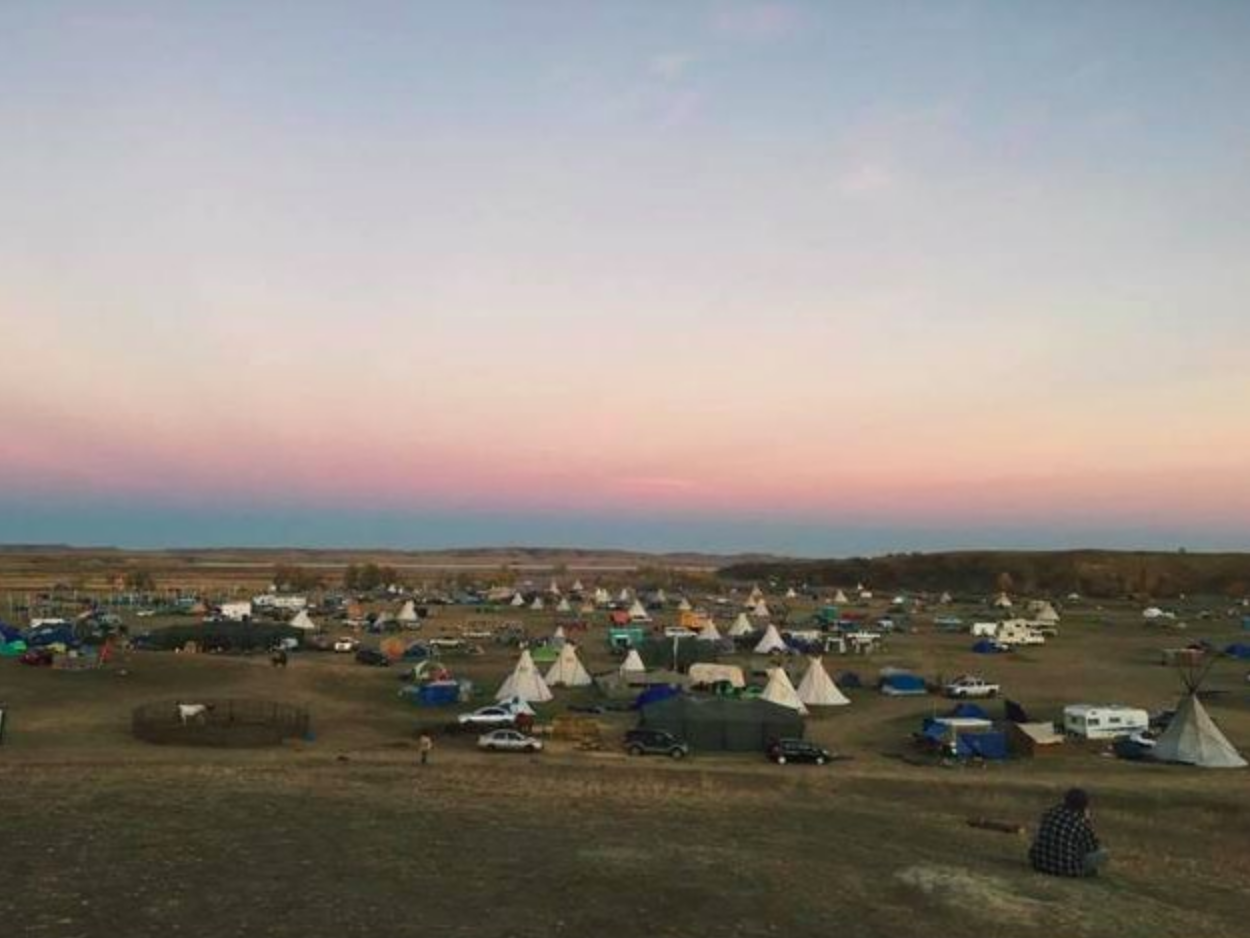
I decided to experience Standing Rock first as a human being, instead of as a member of the press.
Photography